

When I arrived in the United States in 1997 on an E-2 visa, I did not have a U.S. credit score. I didn’t was even eligible for a social security number as a dependent wife. Today is a different story. I had money. We had a business plan. We had a hotel to open. What I did not have was any understanding of how the American financial system actually works, and nobody sat me down to explain it before I started making decisions.
The mistakes I made in those first years were not because I was careless. They were because I was operating on assumptions I had carried from a completely different financial environment. That gap cost me time, money, and credibility I did not have to spare.
E-2 visa banking mistakes new arrivals make are rarely dramatic. They are quiet errors. The kind that compound over months before you realize they are working against you. A separate business account that is not opened correctly. A personal credit profile that sits invisible for a year because nobody explained how U.S. credit reporting works. An investment trail that looks clean on paper but raises questions because the banking structure around it was set up without context.
These are not legal failures. They are operational failures. And they are almost entirely preventable if you understand what you are walking into before you arrive.
Key Takeaways
- U.S. banking and credit systems work differently from most countries, and new E-2 arrivals rarely receive a real orientation to those differences.
- Not separating personal and business banking from the first day creates documentation problems that become harder to untangle over time.
- Arriving without a U.S. credit history does not mean you are in trouble, but ignoring that gap from day one does.
- The investment trail you build in the first months of your E-2 operation matters beyond what you may expect.
- Starting your banking setup with the renewal in mind, not just the approval, changes the quality of the decisions you make on arrival.
Table of Contents
WHY THIS PROBLEM IS BIGGER THAN PEOPLE EXPECT
Most E-2 applicants spend months focused on the application itself. The business plan. The investment evidence. The documentation package. By the time they land, the visa is approved and the immediate pressure is off. The attention shifts to getting the business operational.
Banking and credit decisions get made quickly, without much thought, because they feel like logistics. They are not.
The U.S. financial system is built on a credit history model that most countries do not use in the same way. When a new E-2 investor arrives, they are essentially invisible to that system. No U.S. credit score. No established banking relationships. No financial track record that American institutions can see.
This is not a problem in itself. Plenty of successful business operators in the United States started from that position. The problem is when people do not know they are invisible. They assume their international financial standing translates. It does not.
A client I spoke with once described arriving with substantial funds, a healthy banking history in his home country, and the genuine expectation that setting up a business bank account here would be straightforward. He spent three weeks trying to open accounts at three different institutions because he had not anticipated the documentation requirements or understood why his international credentials were not being recognized.
That experience is not unusual. It is common. And it is the kind of friction that puts new arrivals behind schedule before the business has even started operating.
The E-2 visa banking mistakes new arrivals make fall into several categories. Structural mistakes, timing mistakes, and strategy mistakes. Each one has consequences that reach further than the immediate inconvenience.
THE STRUCTURAL MISTAKES
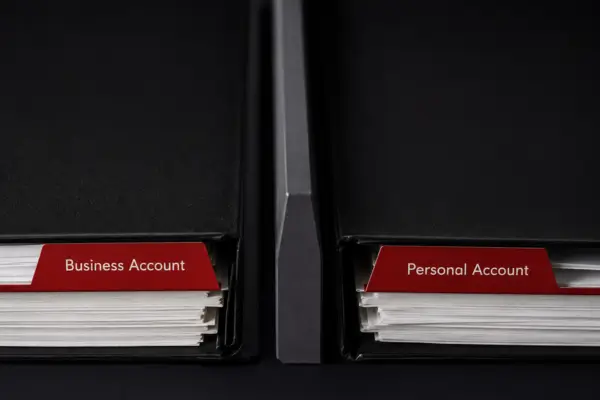
Mixing personal and business finances from the start
This is the most consistent mistake I see. New E-2 investors open a business account but continue running personal transactions through it, or they use personal accounts to cover early business expenses because it is easier in the moment.
For an E-2 operator, this is not just a bookkeeping problem. It creates ambiguity in the very financial record that should be demonstrating your business is legitimate, operational, and non-marginal. When renewal time comes, and it will come, you want a business banking history that is clean, coherent, and easy to read. Mixed accounts produce the opposite.
Open a dedicated business checking account from the first day of operations. Keep it separate. Not mostly separate. Completely separate.
Choosing the wrong type of business account
Not all business accounts serve an E-2 operation the same way. Some banks offer basic business checking that works well for a simple local business but creates friction for an operation that receives or sends international transactions. Other institutions have compliance requirements that create delays or documentation requests that slow operations during a period when you need stability.
Before you open any account, understand what your business will actually need. If you anticipate international transfers, payments to vendors in your home country, or currency conversions as part of normal operations, those requirements should shape which institution you choose. The cheapest option is not always the right option for the specific structure of an E-2 business.
Not establishing the EIN before opening accounts
Your Employer Identification Number is how the IRS identifies your business entity. You need it before you can open a proper business account. Some new arrivals try to use a Social Security Number as a shortcut, particularly early in the process, and this creates a financial structure that does not clearly separate the individual from the entity. Get your EIN established before you attempt to open any business banking.
THE CREDIT MISTAKES
Assuming your home country credit history counts
It does not. International credit history does not transfer automatically to U.S. credit bureaus. When you arrive, regardless of your financial standing in your home country, you are starting from zero in the U.S. credit system. This surprises people who have excellent financial records abroad and who have never had any difficulty accessing credit in their own countries.
This is a systems issue, not a character issue. But it affects you in practical ways. Landlords run credit checks. Business vendors run credit checks. Some banking products require a minimum credit profile to access. Arriving without any U.S. credit history means you may face friction in places you did not anticipate.
There are services that have started attempting to bridge international credit histories, and some banks serve immigrant populations with products designed for people starting their U.S. credit journey. These are worth investigating before you arrive, not after. But even with those resources, building a U.S. credit profile takes time, and the clock starts on your arrival date, not before.
Waiting to start building credit
The most common response to arriving with no U.S. credit history is to delay addressing it. There is enough happening in the first months of an E-2 startup that adding credit-building to the list feels like a lower priority. It is not.
Every month you delay is a month of credit history you will not have later. The U.S. credit system rewards longevity. A secured credit card opened in the first week of your arrival, used responsibly and paid in full each month, will do more for your long-term operational credibility than most people realize.
Using personal credit for business expenses
The pressure to get a business operational sometimes leads E-2 investors to put early business expenses on personal credit cards because the business account is not yet set up, or because the business does not yet have access to credit instruments. This creates the same separation problem as mixed banking. It also builds a personal credit profile that reflects business spending patterns, which can create questions when you later try to access personal financing.
Build your business credit and your personal credit as parallel tracks from the beginning. They serve different purposes and should not be substituted for each other.
Not applying for an ITIN early
If you arrive before your Social Security Number is fully processed, an Individual Taxpayer Identification Number allows you to interact with financial systems that require a tax identification number. Some credit products and banking options are accessible with an ITIN even without an SSN. New arrivals who wait for their SSN before engaging with any financial institution lose months of establishment time. Consult a tax professional early about your identification situation and what it enables. This is not immigration advice. It is a practical financial orientation.
THE STRATEGY MISTAKES
Building a banking structure for the application, not for the renewal
The investment trail you need to demonstrate for an initial E-2 application and the operational banking record you need to demonstrate at renewal are related but different. New arrivals sometimes set up their banking with the application in mind and then discover at renewal that their banking history tells a less clear story than they expected.
Renewals for E-2 operators look at the health and operational credibility of the business over time. A banking record that shows inconsistent revenue, irregular account activity, or a pattern that does not match the business plan submitted at application creates questions. It does not have to. A banking structure that was set up thoughtfully from the beginning, with regular and documentable operational activity, supports renewal preparation instead of complicating it.
I know this from 29 years of living it. Not from reading about it. The financial habits you build in the first six months of your E-2 operation follow you into every renewal you ever file. Start with the long view, not just the immediate requirement.
Treating the business bank account as a holding tank
Some E-2 investors open a business account, deposit investment funds, and then leave them largely untouched while the business is being established. This is understandable during a setup phase, but a bank account that shows large deposits and minimal operational activity does not communicate what you need it to communicate.
An E-2 business should show operational banking activity that corresponds to the business described in the application. Payroll transactions if you have employees. Vendor payments that correspond to your industry. Revenue deposits that demonstrate actual business activity. A dormant account with a large opening deposit tells a different story.
Not maintaining documentation discipline
Every significant transaction in your business banking should be documentable. Not just traceable in the bank statement, but documentable with a corresponding record that explains what it was for. Invoices. Contracts. Receipts. Agreements.
This is not about surviving an audit. It is about being able to tell a coherent story about your business at any point. The investors who navigate E-2 renewals most smoothly are the ones who have maintained documentation habits from day one. Those habits start with how you run your banking.
FAQ: E-2 Visa Banking Mistakes New Arrivals make and Credit Questions Actually Ask
Do I need a U.S. credit score to open a business bank account for my E-2 business?
Most banks do not require a personal U.S. credit score to open a business checking account, but documentation requirements vary. You will typically need your business formation documents, EIN, and government-issued identification. Researching specific institution requirements before arrival avoids surprises.
Can my investment funds stay in a personal account while I set up my business?
Keeping investment funds in a personal account while setting up a business entity creates documentation ambiguity. The cleaner approach is to establish your business entity and banking structure so the investment trail moves cleanly from personal source to business account. Consult a qualified professional about how to structure this correctly for your specific situation.
How quickly should I start building U.S. personal credit after arriving?
As quickly as possible. A secured credit card opened in the first weeks, used for small purchases and paid in full monthly, begins building a credit file immediately. There is no version of this where starting later is better. Every month of credit history adds to the longevity that U.S. credit scoring rewards.
Does my business banking history affect my E-2 renewal?
Your business banking record is part of the operational evidence that demonstrates your enterprise is active, non-marginal, and being developed and directed by you. A banking history that reflects genuine operational activity supports that narrative. Sparse or inconsistent banking activity creates questions at renewal that are harder to answer than they are to prevent.
What documentation should I keep alongside my business banking records?
Every significant transaction should have a corresponding record: invoices, contracts, receipts, payroll records, vendor agreements. Bank statements alone tell part of the story. The documentation that sits alongside them allows you to explain each line clearly when you need to. Build that habit from the first transaction.
FINAL THOUGHT
The banking and credit decisions you make in the first 30 to 90 days of your E-2 operation are not just logistics. They are the foundation of the financial narrative that will follow your business for as long as you hold the visa.
Most of the E-2 visa banking mistakes new arrivals make are not born of carelessness. They come from entering a financial system that is genuinely different from what most people have operated in before, without a clear orientation to what those differences mean in practice.
You cannot afford to build your financial structure on assumptions. Not with this visa.
If you are approaching your first E-2 year or preparing for your first renewal, I offer E-2 Readiness Reviews that include operational preparation as part of the scope. You can book a session at e2visaconnect.com.
The cleaner your financial foundation, the fewer surprises you face later. That is not theory. That is 29 years of watching what works and what does not.
Reference Resources
These resources may be useful for general financial orientation for new U.S. arrivals. They are not E-2 visa specific and do not replace consultation with a qualified immigration attorney or financial advisor.
- IRS ITIN Application Information
- Bank On Initiative (accessible banking for immigrants)
- Experian Credit Building for Immigrants
Note: If you are navigating E-2 visa requirements, investment structuring, or any immigration-related decision, consult a qualified immigration attorney. The information in this post addresses operational and financial preparation, not legal immigration advice.