

Completeness and defensibility are not the same test, and most applicants only discover the difference after an officer asks a question their file cannot answer.
What most E2 applicants miss with their E2 document preparation is this: a complete file and a defensible file are not the same thing.
Completeness means every tab is filled. Every category on the checklist has something behind it. A business plan, some bank statements, a lease, an invoice or two. Defensibility means something different. It means every document in that file answers a question before an officer has to ask it. It means the story the paperwork tells matches the story you tell in the interview, down to the dates and the numbers. Most applicants who feel uneasy about their E2 document preparation are not missing documents. They are missing the connective tissue between them, and they cannot name what is wrong because nothing is technically absent. It just does not hold together yet.
That uneasy feeling, the one that has you rereading your file at midnight wondering if it is good enough, is usually correct. Not because you are careless. Because nobody explained that “complete” was never the standard. Officers are not counting documents. They are reading a case. If your business plan says one growth trajectory and your financial projections say another, the file is complete and it is also weak. If your source of funds trail has a gap between what left your home country and what arrived in the U.S. account, the file is complete and it is also weak. Strong E2 document preparation is not about volume. It is about whether every piece of paper in that binder is pulling in the same direction, toward the same conclusion, without contradiction.
Key Takeaways
- A complete file and a defensible file are different standards, and most applicants only meet the first one.
- Officers read files for consistency between the business plan, the financials, and the interview narrative, not for document count.
- Gaps in the source of funds trail are one of the most common and most preventable causes of delay.
- Organization signals seriousness. A file submitted as a binder with a clear table of contents reads differently than a folder of scanned receipts.
- Documentation readiness is a business exercise, not a paperwork exercise, and it should happen before an attorney is involved, not after.
Table of Contents
Where the Confusion Actually Starts
Applicants are not wrong to feel unsure. Most of what they hear about E2 document preparation focuses on the investment number and the business concept, and almost nothing on how the supporting record has to be built. Somewhere along the way, “documentation” got flattened into a checklist. Collect the bank statements. Get the lease signed. Write a business plan. Check the boxes. But here is what most applicants never consider: the checklist tells you what to gather. It does not tell you whether what you gathered actually proves anything.
I have watched this pattern for close to three decades of living under this visa myself, first as the applicant and later as the person entrepreneurs come to when their file feels shaky. The applicants who struggle are rarely the ones with thin businesses. They are the ones with real businesses and disorganized proof of it. Their bank records exist but do not reconcile with their stated investment. Their business plan describes a five-year growth story that their actual lease and equipment purchases do not support yet. Nothing is fabricated. It is just scattered, and scattered reads as weak even when the underlying business is not. What consulates actually look for is rarely the checklist itself. It is whether the checklist items agree with each other.
This is also where the line between business preparation and legal preparation gets blurry for a lot of applicants, and it is worth being direct about it here: assembling a defensible business record is not the same as legal strategy, and I am not an immigration attorney. Questions about how a specific gap or inconsistency will be treated by a particular consulate or adjudicator belong with qualified legal counsel. What I can tell you, from having built and rebuilt that kind of record myself, is what officers are trained to look for structurally, and how to organize your business file so it survives the read.
The business plan is usually where the first crack shows. A defensible business plan has to match the financial documentation dollar for dollar, not just in spirit. If your plan projects hiring three employees in year one and your budget only accounts for one salary, that inconsistency will surface, and it surfaces at the worst possible time: during the interview, not before it.
What the Evidence Actually Shows With E2 Document Preparation
E2 document preparation is not a minor detail in this process. It is close to the whole process. Department of State data puts overall E2 approval rates in the 90 to 92.5 percent range for properly prepared applications, which sounds reassuring until you look at what separates the approved files from the roughly 5,600 refusals recorded in a recent fiscal year. Insufficient or disorganized investment documentation, weak or generic business plans, and incomplete proof of the lawful source and path of funds are named consistently as the leading causes of denial, and they are also the most preventable ones. None of those failure points involve the quality of the underlying business idea. They involve whether the paper trail proves what the applicant says is true.
The source of funds trail deserves particular attention because it is where organized applicants still get tripped up. It is not enough to show that money arrived in a U.S. account. Officers expect a traceable line from where the money came from, whether that is salary, business profits, an asset sale, or a gift, through every transfer, to its final use in the business. A gap anywhere in that chain, even an innocent one caused by consolidating accounts or converting currency through an intermediary bank, reads as a documentation weakness rather than what it usually is: a bookkeeping oversight. Defensible financial records close that gap before it becomes a question at the window.
2026 has sharpened this further. Consular officers and adjudicators are applying greater scrutiny to business plans, investment documentation, and source of funds evidence than in prior cycles, and Request for Evidence rates have increased across investor visa categories industry-wide. A 221(g) refusal, the temporary hold that asks for more documentation rather than issuing a final denial, is itself a data point worth understanding. It is not a rejection of your business. It is the system telling you, after the fact, exactly what your E2 document preparation should have addressed the first time. The applicants who avoid that hold are not the ones with the biggest investments. They are the ones whose files already answered the question before it was asked.
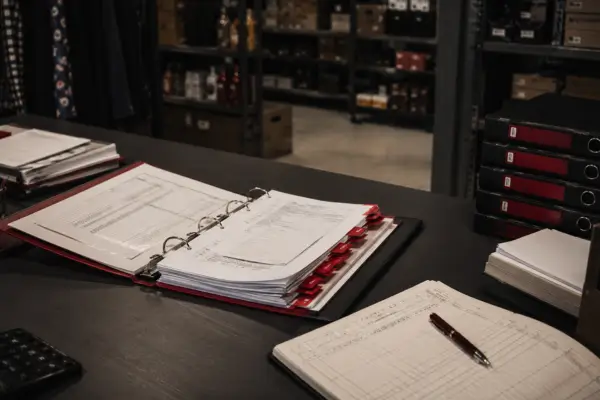
There is a structural detail here that most applicants never hear about until they are deep into the process: official guidance instructs that supporting documents be submitted as an organized binder, with a table of contents and clearly labeled sections separating ownership proof, investment evidence, substantiality, non-marginality, and proof of a real operating enterprise. That is not a formatting suggestion. It reflects how these files are actually read. An officer working through dozens of cases in a day is not going to hunt for your evidence. If it is not organized so it can be found in seconds, its persuasive weight drops, even if the underlying fact is solid. Compliance records follow the same logic: officers read your record as evidence of how seriously you run the business, not just proof that you meet a technical requirement.
What a Properly Prepared File Actually Looks Like
Here is what changes once you stop treating this as a paperwork exercise and start treating it as a business exercise. Every document in your file should be able to answer a question on its own, without you standing next to it explaining what it means. That is the real test of E2 visa document preparation, and it is a business discipline, not a legal one.
Start with internal consistency. Your business plan, your financial projections, your lease, and your staffing plan should tell the exact same story in four different formats. If one document describes a business that will need 1,200 square feet and your lease is for 400, that inconsistency does the work of an objection before anyone raises one. This is the kind of gap that a serious E2 business review is built to catch, because it is far easier to find these contradictions before submission than to explain them after a request for evidence arrives.
Next, build the source of funds trail as its own standalone narrative, not as an afterthought attached to the bank statements. Every transfer should be traceable, every currency conversion documented, every gap explained in writing before anyone asks about it. This is tedious. It is also the single highest-leverage thing most applicants can do to strengthen a file, because it is where organized businesses still lose ground to disorganized paperwork.
Finally, organize the physical or digital file the way it will actually be read: tabbed, indexed, and sequenced so that ownership, investment, substantiality, and operational reality are each easy to locate and easy to verify independently. This is not about impressing anyone with binder tabs. It is about respecting how little time an officer has to find what you are asking them to trust. A business that looks organized on paper reads as a business that is actually being run with discipline, because in most cases, it is. E2 document preparation done this way stops being a source of anxiety and starts functioning the way it is supposed to: as proof, not paperwork.
Frequently Asked Questions About E2 Document Preparation
How do I know if my documentation is actually complete versus just present?
Completeness means every required category has something in it. Readiness means those documents agree with each other and with your interview narrative on every material fact. If your business plan, financials, and lease tell three slightly different stories, the file is complete but not yet defensible.
What is the most common E2 document preparation gap you see?
An incomplete source of funds trail. Money arriving in a U.S. account is not proof of a lawful source. Every transfer, conversion, and intermediate step needs to be traceable in writing, not just implied by the final balance.
Should I organize my documents myself or wait until I hire an attorney?
Organize them yourself, and do it early. Attorneys are far more effective reviewing a defensible file than assembling one from scratch, and a disorganized file costs time and money once legal review begins. This is business preparation work, not legal work.
Does a 221(g) request mean my case was denied?
No. A 221(g) is a temporary hold requesting additional evidence, not a final decision. It usually signals a specific documentation gap. For guidance on how to respond to one, that is a legal question and belongs with a qualified immigration attorney.
How far in advance should I start organizing my E2 documentation?
Before you hire an attorney, ideally before you finalize the business itself. Documentation readiness shapes decisions about entity structure, investment sequencing, and record keeping that are far easier to build correctly from the start than to reconstruct later.
Final Thought
You are not wondering if your documents are good enough because you are unprepared. You are wondering because nobody ever told you what “good enough” actually means, and a stack of paperwork does not answer that question by itself. The applicants who submit with confidence are not the ones who gathered the most documents. They are the ones who tested every document against every other document before an officer ever had the chance to.
That work is available to you before you spend a dollar on attorney fees. Organize the file as a business record first, not a legal one. Close the gaps you can already see. Then bring in legal counsel to do what only legal counsel should do. If you want a second set of eyes on where your file actually stands, an E2 Business Review is built for exactly this: finding what is missing before an officer does.
A defensible E2 case is not built in the interview room. It is built at the desk, months before, one consistent document at a time.
Annett T. Block is an E2 business broker and advisor with 29 years of lived E2 operational experience. She helps committed investors evaluate business viability, buy or sell E2 businesses, and assemble the documentation needed for an E2 visa package. She is not an immigration attorney. For legal advice specific to your case, consult a qualified immigration attorney.
Reference Resources
USCIS: E-2 Treaty Investors – Official qualification requirements and classification rules for E-2 treaty investors.
U.S. Department of State: Treaty Trader and Treaty Investor Visas – Official visa application and documentation guidance from the Department of State.
Nonimmigrant Treaty Trader/Investor Visa Application Instructions, DS-156E – Official government instructions confirming that supporting documents should be submitted in an indexed, tabbed binder and detailing required evidence categories.