

Every administration shift creates noise. Here is how to separate what matters from what does not.
Most of what circulates online after a political transition is speculation dressed as analysis. The E2 world is no different. When a new administration takes office, the content machine runs hot with predictions, warnings, and vague calls to “stay informed”, but rarely tells you what you are actually supposed to do with the information.
What I can offer is not legal prediction. It is operational perspective built from nearly three decades inside the E2 process and through administration changes, policy swings, tariff cycles, and moments when no one could tell you with certainty what came next. The answer in those moments was the same then as it is now: the investors who had built strong foundations were the ones who adapted without crisis.
The changes for E2 visa holders introduced since January 2025 are real and worth understanding. Some carry genuine operational weight. Others are political noise that will not touch a well-prepared investor. Knowing the difference is what this article is about.
Key Takeaways
- The E2 visa has not been targeted for elimination or structural dismantling. It remains one of the most stable pathways for serious investors.
- Enhanced scrutiny is the real shift. Applications are reviewed more rigorously, and documentation standards have risen across the board.
- Trade policy changes can affect E2 business operations, but they do not change the core requirements of the visa itself.
- Preparation quality is now more important than ever. A weak case that might have cleared quietly under a different environment will face harder questions today.
- This is not a moment to panic. It is a moment to audit your readiness and close the gaps before they become problems.
Table of Contents
The Political Cycle and the E2 Visa: What Actually Moves
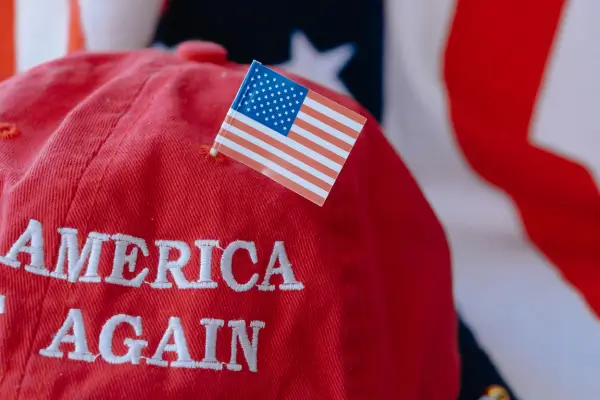
Every administration brings a tone shift. The first Trump term (2017–2021) made that visible in the E2 world. Not through formal policy elimination, but through a noticeable tightening of adjudication standards. The “Buy American, Hire American” orientation led to stricter enforcement of the marginality rule and increased pressure on small-scale or service-sector investments. Applications with investments below $100,000, particularly in lower-revenue service businesses, saw higher rates of Requests for Evidence and longer review timelines.
What did not change was the fundamental structure of the E2 visa. Approval rates stayed above 95 percent through that period, and the visa category itself was never in serious legislative danger. Largely because E2 investors create jobs for U.S. workers, which aligns with the administration’s economic priorities.
The second term, beginning January 2025, has followed a similar pattern. Over 175 immigration-related executive actions were signed in the first 100 days alone. The enforcement environment is tighter. The review process is more exacting. But the E2 visa remains intact, and applications from serious, well-prepared investors continue to succeed.
The changes for E2 visa holders in this environment are real. They are operational, not existential. Understanding the difference matters.
For a deeper look at how the E2 adjudication environment has shifted since 2017, E2 visa scrutiny and business credibility.
What Changes for E2 Visa Holders Actually Mean in Practice
1. The Scrutiny Environment Has Tightened
This is the most substantive change for active and prospective E2 investors.
Consular officers have been operating with increased attention to case quality, documentation completeness, and the credibility of the underlying business. According to immigration legal analysts tracking the current administration, adjudicators are scrutinizing whether investments were made directly into the U.S. economy, whether the business demonstrates genuine job creation potential, and whether manager-level employees are drawing salaries commensurate with their stated roles. Underpaying key employees. A common shortcut in marginal business structures, is now a more visible red flag than it was before.
In 2025, interview waivers were also eliminated for most applicants. The long-standing policy that allowed consulates to waive in-person interviews for certain age groups was revoked, meaning more applicants are now required to sit for a full consular interview and answer questions about their business in real time.
Site visits by USCIS to verify business operations have also increased. If your business exists primarily on paper, that discrepancy has more chance of surfacing today than it did three years ago.
What this means practically: a case that might have passed quietly through a more permissive environment will face harder questions now. The floor for what counts as “adequate documentation” has risen. This is not a reason to avoid the process. It is a reason to stop treating documentation as a compliance exercise and start treating it as a credibility argument.
2. Trade Policy Changes Have Reached E2 Business Operations
This is where things get more complex and where a lot of content online gets it wrong by conflating trade policy with visa policy.
The tariff environment that emerged in early 2025 has created real cost and supply chain pressures for E2 businesses that depend on imported goods or materials. Canadian and Mexican imports faced significant tariff increases early in the administration. Businesses in manufacturing, retail, food service, or distribution that relied on cross-border supply chains had to absorb new costs or restructure sourcing quickly.
This does not change your E2 visa requirements. It changes your business reality. And your business reality feeds directly into your visa case at renewal time.
A business under financial pressure is harder to defend as non-marginal. A business that was profitable when you applied but has since contracted due to external cost increases needs a different renewal conversation than one that is growing. The connection between trade policy and your E2 future is not legal, it is operational. And that is exactly why it matters.
E2 investors in trade-sensitive sectors should be working closely with their business advisors (not their immigration attorneys) to understand the financial trajectory of the business and what it will look like at renewal. The changes for E2 visa holders in this area are indirect but consequential.
For context on how business sustainability connects to renewal strength.
3. Processing Times and Administrative Complexity Have Increased
This one is less dramatic than it sounds, but it matters for timing.
USCIS fees increased in 2024 and 2025. Standard and premium processing windows have extended in some case types. Consulates that previously moved quickly now carry heavier caseloads. The administrative machinery of the immigration system is handling more volume with more scrutiny per case, which means timelines have stretched.
For applicants counting on a specific entry date or who are running their investment timeline close to the edge, this has real consequences. A 60-day delay when your lease starts in 30 days is not just inconvenient. This is a business problem.
The lesson here is not new, but the current environment makes it more visible: sequencing matters. Investing before you have clarity on timing is a risk. Assuming your attorney will catch every administrative shift is also a risk. The investor who understands the full operational timeline (not just the legal timeline) is in a fundamentally better position.
4. The Deregulation Environment Is Mixed
The current administration has expressed a general orientation toward reducing regulatory burden on small businesses. For some E2 investors, particularly those in industries where regulatory compliance added significant cost, there may be some easing in specific areas.
But deregulation is not uniform, and it is not always a benefit. In labor law, environmental compliance, and sector-specific regulation, reduced oversight can create ambiguity rather than clarity. An E2 investor who built their business plan around a specific regulatory structure may find that the landscape has shifted. Sometimes in their favor, sometimes not.
More relevant for most E2 holders: the deregulation signal does not reach immigration. Visa adjudication standards have not loosened. If anything, they have tightened. The general political orientation toward smaller government has not translated into a more permissive approach to E2 case review.
Understanding which changes for E2 visa holders carry operational weight and which are primarily political signal is the core skill this moment requires.
What Serious Investors Should Actually Do
The question under all of this is not “should I be worried?” The question is “am I actually prepared?”
Preparation in the current environment means something more specific than it did a few years ago. It means documentation that stands on its own without explanation. It means a business that can survive a site visit, not just a paper review. It means a financial structure that reflects real investment, not a minimized entry strategy. It means understanding your renewal timeline before your first approval, not the week before it expires.
The E2 visa rewards serious operators. It always has. What has changed is that the margin for under-preparation has narrowed. The cases that were marginal are now more likely to face problems. The cases that were strong continue to clear.
That distinction (between an approvable case and a defensible one) is where the real work happens. And it happens before the attorney is engaged, not after.
If you want to know where your preparation stands right now, that is exactly what a readiness review is designed to surface.
Frequently Asked Questions About Changes for E2 Visa Holders
Has the new administration eliminated or dramatically changed the E2 visa?
No. The E2 visa structure remains intact. What has changed is the scrutiny environment and administrative processing climate. Applications from well-prepared investors with credible, job-creating businesses continue to succeed at high rates. The E2 has not been a legislative target because it aligns with job creation priorities.
Do the tariff changes affect my E2 visa status?
Tariffs do not affect your visa classification directly. They affect your business operations, and your business operations affect your case at renewal. If your business is in a trade-sensitive sector, the financial pressure from tariff increases is worth understanding before your next renewal review, not during it.
Are processing times significantly longer now?
Processing timelines have stretched for some case types and consulates. USCIS fees have increased. Interview waivers have been eliminated for most applicants. For applicants with tight investment timelines, the current administrative environment requires more lead time than previous years allowed.
What does “enhanced scrutiny” actually mean for my application?
It means adjudicators are asking harder questions about business viability, job creation, investment documentation, and manager credibility. Cases that would have passed with minimal supporting evidence under a more permissive environment are now generating Requests for Evidence. Documentation completeness is not optional. It is the argument.
Should I wait to apply until the political environment settles?
Waiting rarely improves an E2 case. The E2 visa has survived multiple administrations, including ones with hostile orientations toward immigration broadly. What has consistently determined outcomes is preparation quality, not political timing. A well-prepared investor applies. A poorly prepared investor waits and hopes and that is rarely a strategy that pays off.
Final Thought
Every administration change produces the same reaction: fear that the rules are about to collapse, and a wave of content designed to amplify that fear. Most of it misses the point.
The E2 visa is not a fragile structure. It has survived political cycles, policy swings, economic contractions, and periods of genuine enforcement pressure. What changes is the environment that surrounds a case. The scrutiny level, the processing climate, the bar for documentation adequacy.
What does not change is this: prepared investors navigate these moments. Unprepared investors discover the gaps at the worst possible time.
The changes for E2 visa holders in this administration are real and worth understanding clearly. But the response to those changes is not anxiety. It is preparation. It is auditing your case before a problem surfaces, not after. It is understanding your business’s operational trajectory long before renewal pressure begins.
If you are serious about your E2 future, the most useful thing you can do right now is know exactly where you stand.
Book your E2 Readiness Review at and find out before someone else decides for you.
The investors who succeed in difficult environments are not the ones who got lucky with timing. They are the ones who were ready.
Annett T. Block is an E2 broker and advisor with lived operational experience as an E2 investor since 1997, owner-operator, and strategic consultant. She works with serious applicants to build defensible, operationally credible E2 cases before legal submission. She is not an immigration attorney and does not provide legal advice. All immigration matters should be handled by a licensed immigration attorney.
Reference Resources
Trump Administration E2 Visa Impact and Updates: Covers enhanced scrutiny trends, interview waiver elimination, and consular review changes under the current administration.
E2 Visa Policy Predictions 2025: Outlines the enforcement tone shift, site visit increases, and adjudication climate changes for E2 applicants.